The Nigerian Bar Association (NBA) and former Vice President, Atiku Abubakar, have called for the immediate suspension of the implementation of the recently enacted Tax Reform Acts, amid allegations of post-legislative alterations that they warn threaten constitutional governance and the credibility of Nigeria’s lawmaking process.
In a statement issued on Tuesday, the President of the NBA, Mazi Afam Osigwe (SAN), expressed grave concern over the controversy surrounding the laws, describing it as a direct challenge to the integrity, transparency and supremacy of the legislative process.
Osigwe warned that the alleged alterations strike at the core of constitutional democracy and, if left unaddressed, could severely undermine public confidence in governance.
“The Nigerian Bar Association considers it imperative that a comprehensive, open and transparent investigation be conducted to clarify the circumstances surrounding the enactment of the laws and to restore public confidence in the legislative process. Until these issues are fully examined and resolved, all plans for the implementation of the Tax Reform Acts should be immediately suspended,” the statement read.
The NBA further cautioned that the legal and policy uncertainty generated by the controversy could unsettle the business environment, weaken investor confidence and create unpredictability for individuals, businesses and institutions expected to comply with the new tax regime.
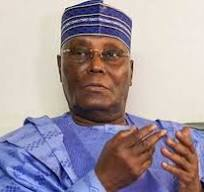
Echoing similar concerns, Atiku Abubakar described the alleged alterations as a “grave assault on legislative supremacy”, accusing the executive branch of unilaterally inserting provisions that were neither debated nor approved by the National Assembly.
He alleged that the amended versions introduced coercive enforcement powers, imposed harsher financial obligations on citizens, and removed key accountability mechanisms, all without parliamentary authorisation.
The controversy follows an earlier intervention by a member of the House of Representatives from Sokoto State, Abdussamad Dasuki, who last week drew the attention of lawmakers to discrepancies between the tax laws passed by the legislature and the versions subsequently gazetted by the Federal Government. In response, the House constituted a seven-member ad hoc committee to investigate the allegations.
Atiku, in a statement on Tuesday, joined growing calls for the suspension of the laws, which are scheduled to take effect on January 1, 2026, pending the outcome of the legislative probe.
Both Atiku and the NBA urged the National Assembly to correct any illegal alterations, ensure accountability for those responsible, and safeguard the sanctity of the legislative process.
The former Vice President also called on the judiciary to invalidate any unconstitutional provisions, urged civil society and Nigerians to resist what he described as an erosion of democratic principles, and asked the Economic and Financial Crimes Commission (EFCC) to investigate and prosecute those allegedly involved in the unlawful amendments.
“This draconian overreach by the executive branch undermines the foundational principle of legislative supremacy in the making of laws. It reveals a government more interested in extracting wealth from struggling citizens than empowering them to prosper,” Atiku said.
He alleged that the following provisions were illegally inserted into the tax bills after parliamentary approval, in violation of Sections 4 and 58 of the 1999 Constitution: the grant of arrest powers to tax authorities; property seizure and garnishment without court orders; and enforcement sales conducted without judicial oversight.
“These provisions effectively transform tax collectors into quasi-law enforcement agencies, stripping Nigerians of the due process protections deliberately embedded by the National Assembly,” he said.
Atiku further criticised what he described as increased financial burdens imposed on taxpayers, including a mandatory 20 per cent security deposit before appealing tax assessments, compound interest on tax debts, and stricter quarterly reporting requirements.
He also condemned the alleged removal of accountability mechanisms, including the deletion of mandatory quarterly and annual reporting to the National Assembly, the elimination of strategic planning submissions, and the removal of ministerial oversight provisions.
“By stripping away oversight mechanisms, the government has insulated itself from accountability while expanding its powers—a hallmark of authoritarian governance,” he warned.
The former Vice President argued that Nigeria’s economic challenges—rising poverty, unemployment and inflation—require policies that empower citizens and expand the tax base organically, rather than punitive taxation.
“True economic growth comes from empowering citizens, not impoverishing them further through punitive taxation and erosion of legal protections,” he said.
Atiku warned that no law can validly take effect unless it is duly passed by the National Assembly, stressing that adherence to this principle is essential to prevent a descent into arbitrary rule.
Meanwhile, responding to public concerns, the Executive Chairman of the Akwa Ibom State Internal Revenue Service, Mr Okon Okon, sought to allay fears over the reforms, clarifying that citizens will continue to have access to their bank accounts without a Tax Identification Number (TIN) from January 1, 2026.
He dismissed claims that personal bank accounts would be restricted as misinformation, stressing that funds in personal accounts are not taxable.
Okon also disclosed that the Joint Tax Board has launched a digital platform enabling Nigerians to generate TINs within seconds using their National Identification Number (NIN) and date of birth.
According to him, the tax reforms are designed to reduce multiple taxation, simplify the tax system and ease the burden on citizens, while stimulating economic growth.
He added that the reforms would reduce the number of taxes across the federal, state and local governments from 63 to about 10, with clearer delineation of collection responsibilities, and commended Akwa Ibom State Governor, Umo Eno, for supporting public sensitisation efforts.
Despite these assurances, the controversy continues to generate intense debate, with growing calls for transparency and constitutional fidelity before the new tax regime takes effect.
About the Author